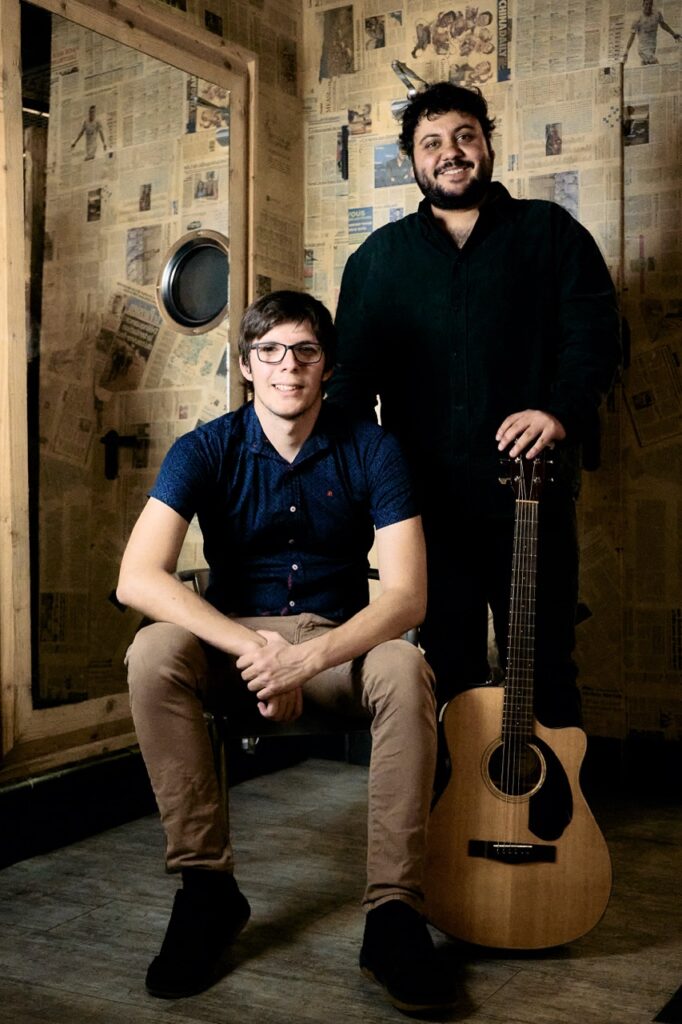
Renato Carranza is a Peruvian musician who has been living in Madrid, Spain, for almost nine years to the date. Although he is involved with the music scene in many other ways, his very own band, Quizás Mañana, is going through a period of changes, self-discovery, and calm before making a comeback.
In this interview, he tells us about his band, his thoughts on music, and, most importantly, how changes can impact both his personal and artistic life.
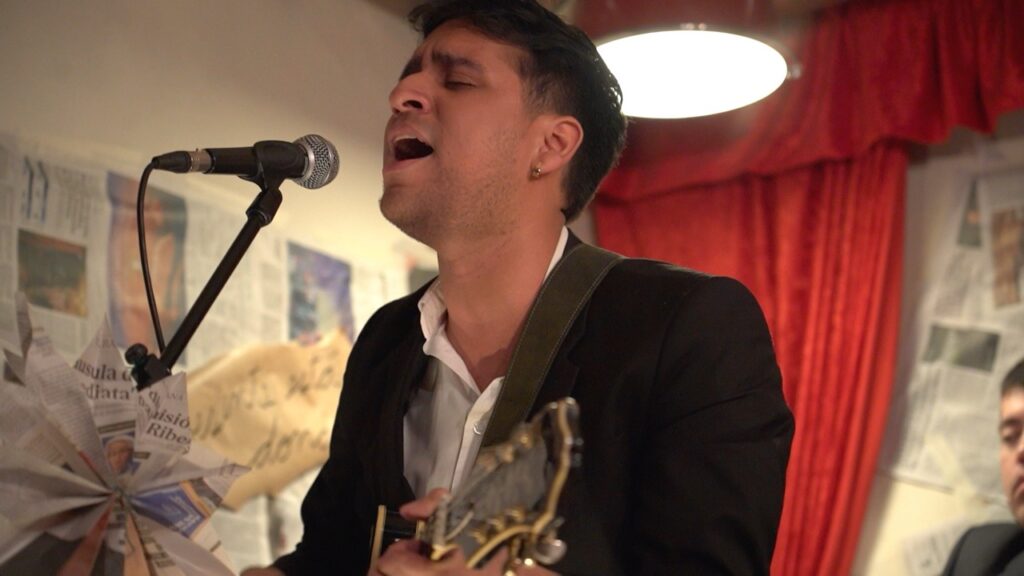
Q: Do you prefer to draw a line between Quizás Mañana and Renato Carranza, or blur it completely?
I think I’ve tried to caricature and make a cooler version of myself, but the key might actually be blurring that line. I like the idea of a stage persona and acting, but I’ve grown tired of carrying the weight of that and constantly keeping in mind that everything has to be manufactured and planned to the detail.
Because of how things are done with another band I’m working with, I think I’m picking up that “it is what it is” energy. No sweetening up. A little rawer. I feel like people who use their own names for a band have a harder time with that, which is why this can’t just be called “Renato Carranza’s band”.
When Kevin Parker started Tame Impala, he chose to work under a band name, but it was just himself. Allowing for the obvious differences (because I think Kevin is simply a genius), by using a band name, I think I tried to protect myself. But at the end of the day, it’s my project, and I should embrace it and say, “This is me.” That puts some pressure on succeeding, but nowadays I don’t care about that. I want to do it for my own joy.
When the band comes back, it’s going to display that perspective, and it’s going to affect both the production and how I show myself to the world. I think that’s what I’ve learned during this “period of absence.” The line has to be blurred. I don’t know if that would work for anybody else, but I want to do it.
Q: Since dropping Habría Que Preguntar in March, things have been pretty quiet on your end. What have you been working on during this hiatus?
That song release wasn’t really part of my plan for many reasons, but the main one was that I felt weird about exposing such a personal song. The only reason it got released is that it was a collab with Joseph Ojeda X, the new artistic project of my producer and friend, Joseph Ojeda. He’s starting that project partnered with other artists and releasing music as collabs. He pitched me his plan of releasing it that way, and I agreed. I feel like dropping it on my own was going to be way more difficult; it just wasn’t going to happen.
During this “period of absence,” I focused on developing a new relationship with music. I’ve been exploring some other paths, like playing drums in a band, touring as a guitarist for another one, producing, and mixing. I’ve enjoyed assuming those roles. I always wanted to do those things, but now I’m already feeling the need to go back to writing music.
I haven’t been writing during this whole time. I’ve been pretty busy with the stuff I mentioned, but it’s coming back to me. I’m using the Voice Memos app again and leaving my guitar next to the couch; I’m getting myself ready and fiddling with Ableton Live and some new plugins that I’ve got. It’s like when the water pulls back and you just know a tsunami is on the way. You can feel it coming. And I’ve had it in me before; I remember it when listening to my old demos. I know what’s coming because I know myself.
Q: What role has Joseph Ojeda played in shaping where Quizás Mañana is headed?
Joseph and I didn’t start a friendship right away, like most of people do. Our relationship started when one person provided the service that the other one was looking for. It started like that, completely professional. Later on, life brought us closer. I always remember the fact that he was the first person that saw something in me, he discovered me and me believe in myself when I was pretty young. Without him I don’t think I would have dared to start writing songs, learning about production and many other things. I think he was a key figure on my twenties, a very relevant one.
Nowadays we are not really working together, but we stay in touch as friends. We call each other every now and then, we talk about our lives and we ask each other for professional opinions. We consult on each other, but we are not actually working together right now. I think that’s because his approach to production is quite elegant, he’s a genius; whereas right now I want to think less and make more.
Q: In your day-to-day life, does Quizás Mañana feel like a constant responsibility hanging over you?
Not really. I felt that way in 2024, when I started releasing music. At that point, I felt like I was carrying a heavy weight. It’s like putting yourself on display for everyone to watch you and have an opinion about you. No matter how big or small, you’re exposed, and sometimes that works against you, leaving no room to enjoy what you’re doing.
Nowadays, I don’t actually care that much. I’d rather make and release music solely because I love it, and it would be a shame to leave the tracks at the bottom of a drawer. That’s what I want, and I think it’s cool. It’s cool to share your new material and view it as a photo album that can be revisited down the line. Ten years from now, I can revisit the music I’ve already released. Even if it wasn’t on streaming platforms, it exists. And I feel the same way about my future releases. I can revisit them later when I’m feeling nostalgic and say, “Yeah, that actually represents 2027 to me.” It will remind me of what was going on in my head at that time and the decisions I made. It’s like a picture: you might look a bit different than the person in the photo, but nobody can say it isn’t you.
Q: In 2024, you released songs that were written and recorded years before finally seeing the light of day. Do you plan on releasing more material from your past, or do you feel disconnected from those older songs now?
There are a couple of songs that I would still like to release, but maybe as B-sides, not really as main releases. I can’t put something in the spotlight that I don’t really identify with anymore. It would be as if Radiohead were to release Creep for the first time during the Kid A era. It’s a great song, but it doesn’t represent the creative or emotional space that Radiohead displays in Kid A. As a fan, I would appreciate the song as a B-side, but if it were in the middle of that album, it would completely break it.
I should have released some of those songs long ago, but I didn’t for various reasons. I don’t want to keep squeezing my nostalgia dry; I’d rather focus on the present and the future.
I already had my quota of nostalgia when I released Despierta, No Voy A Estar, and Madre. There are a few more songs that I worked on back when I was a teenager (and that we even play live with the band now) but my nostalgia has already been satisfied by those.
Q: You settled on the name Quizás Mañana only a couple of years ago, though you’d been playing under various monikers for years prior. Was there a specific turning point that prompted the change?
Well, nobody knows about this. Very few people attended the only concert I played in Lima with my first band. I started that band with my friends Sebastian (drums) and Daniel (bass). To make it work internationally, we wanted a name that sounded good in both English and Spanish. We named the band Mono Café (inspired by Soda Stereo) and had our first (and only) concert in Barranco. That’s when Joseph Ojeda discovered me, because he was there.
After that, we never played together again, but Sebastián and I found a new bass player and changed everything. From that moment, the band turned a bit more into my solo project under the name Nato, which was actually Joseph’s idea. He said, “Well, they should start calling you Nato,” and to this day there are still people who refer to me that way.
At that point, things got a bit more personal. It was like, “Wow, that’s you.” That ended up taking a toll on me, and we took a break for geographical reasons. In 2018, I went to Spain as an exchange student. I was supposed to go back to Peru the following year, but I eventually decided to start a new life here, and my project went on hold until 2024. After that, I felt like using your own name puts all the pressure on you; it puts you directly under the spotlight, and I didn’t really want that. I wanted to focus on the music.
And that’s why I made up Quizás Mañana, because it sounds like a band. When people send us messages, they say things like, “Hello guys,” and “I like what you guys are doing.” It’s kind of fun that they see it as a band, right?
Just like Kevin Parker, I’d like to keep that illusion going for as long as possible. I prefer the idea of a band, even if off stage I’m the one doing everything.
Q: Did you envision Quizás Mañana as a live, performing band from the start, or was it originally just meant to be a vehicle to release your older backlog of material?
At the beginning, I just wanted to release the songs. I felt like just doing that would have put me at peace with myself. Once the songs were out, though, the memories of the last time I played my own music live came flooding back, so I started putting a band together.
Our first concert was acoustic because we didn’t have a bassist, but it helped us get a feel for it and see how I actually felt. I’ve been playing live pretty often since I moved to Spain in 2018, but I had never played my own music, so that first concert was kind of a test-drive. I was really nervous, too, wondering whether I’d feel the same way as before.
The feeling after that concert was amazing. I realized that I still love it, that I still get nervous, and that I still enjoy organizing my own shows, inviting my friends and seeing them bring their own people. I still find joy in designing a flyer. Back in the day we used to create events on Facebook; now it’s more about dealing with online ticket vendors, which is how you track attendance.
I like organizing the events themselves, reaching out to venues, and making deals. That’s part of self-managing a band, and with the experience I have now, I actually have a lot of fun with it. I really like the whole planning process. Everything helps you prepare, but the concert is the goal, and we want the best results when it counts.
Q: What was it like to step back into the process of putting a live band together?
I felt highly motivated when, after convincing my best friend to join the band as a drummer, a random acquaintance who really liked the music wanted to join as well. It’s been pretty frustrating, though, since the drummer left the country. It’s tough trying to find drummers here; everyone is too busy and in high demand. It’s crazy.
Right now, I’m trying to find a young prospect with plenty of free time who’s excited about it. The only problem is that I don’t know people that young anymore; I’m thirty now, so it’s complicated. There are tons of guitarists and tons of bassists, but it’s hard to find a drummer. I’m a drummer too, and as far as I can tell, drummers tend to take a lot more into consideration before getting involved with a band.
Q: You’ve been through a lot of major changes over the last few years. Do you feel like those shifts have any impact on you?
I can see a major impact in the topics and the ways I approach them in the new songs. Being on this planet for a little longer makes you want to explore different subjects and sensations that I might not have felt before, but that are part of becoming an independent adult. For example, love will always exist as a theme, and there’s still love in my own life, but the way I approach it is not the same as when I was in my early twenties.
I think migrating also gives you loads of experience points. I know a lot of people who have migrated, and I see clear differences when compared to people who have always lived in the same place. That gives you a different perspective, whether you want it or not.
Those things affect my day-to-day life, but also my art. I can’t just dedicate my life to making art, but I see that double life as a healthy way of living. Some people would complain about having to work on something unrelated to the art they practice, but I feel like having that mundane life, and being able to step into the artist role whenever you’d like, gives you some rest.
If I were only an artist, I would feel the constant pressure that everything I make has to be commercially viable, accomplish certain things, and meet specific requirements. But since I have another job, I keep myself busy with other things, I can use music as an escape, and I can keep it more interesting. I have things to complain about in my “mundane” life, and I can bring all of that into my artistic world.
Even some musicians that I love struggle at times to stay in touch with reality because they’ve gotten used to a different lifestyle. They rely on tours, music, and sales, and with all of that, it’s much harder to reconnect with a mundane life. I see having this double life as an asset. Renato’s life is a big influence for Quizás Mañana.
Q: Looking ahead, is there any specific theme or topic you’re eager to explore in your future songwriting?
I feel like I’d like to use a more sarcastic and ironic tone to talk about things that are happening right now. I want to touch on social topics.
I really like a band named Mala Gestión, from Valencia, that makes fun of everything, and I think that’s great. I’d like to take things less seriously when I write songs, because that’s more or less who I am. I find it liberating. Why do we sound like we’re wearing a suit and tie when we write songs, if that’s not the way we actually talk?
I don’t think songs about love will ever stop being written; there will always be new ways to talk about it. Maybe with sarcasm? I don’t know. I’m kind of figuring this out as I talk to you. But I want to laugh a bit more and suffer less. I want to dance more and make rhythmically happier songs, you know?
Q: After almost nine years of living in Madrid, how do you view the city compared to when you first arrived?
Everything is more expensive now. I saw a comparison someone made recently about how a 100-square-meter house now costs twice as much as it did in 2018, right when I arrived. All in all, I’m in a favorable position because I have amazing landlords, but that makes me all the more aware of the situation and the protests currently happening in the very center of the city.
I also feel like there’s more violence than before. There are certain incidents that didn’t use to happen here, and now you hear about them pretty often.
There are also way more people now. In general, I don’t really mind it, except for when I take the metro. That’s when I really notice it. We suffered all summer because they didn’t turn on the A/C on Metro Line 1. Fortunately, I only have to ride it once a week, but some people take it twice a day, and that must be terrible.
The city has changed, but it’s still attractive to me. There’s always something to do, something new. The lifestyle is a little more hectic, but that’s just how it is.
Q: What does your songwriting process look like these days?
Not that long ago, I found out that I really like composing while the TV is on. I like having some background noise. For some reason, it helps me take my ideas less seriously, and I can fiddle around more. It kind of gives my brain the green light to go further because there’s no pressure; I don’t over-analyze myself. I think that kind of background noise was always present in Lima. As soon as you open the window, you hear cars honking everywhere. Here, it’s way quieter.
I didn’t think about it before, but I’ve written many songs with the noise of Avenida Aviación in the background. If you listen to the voice memos I recorded on my phone, there’s always a ton of honking.
Now that I don’t have that, I have to resort to having the TV on. I can even write songs while listening to music in the background; that one’s a little trickier, but usually, I just put on the news or some show I’m already bored of, grab my guitar, and start playing around until something interesting happens. That happens to me all the time, always with the guitar.
Q: What’s your honest opinion of your own music?
I’d say it follows the broader trend of music genres getting more mixed. I’m not talking about any specific song, but in general, if you listen to everything I’ve released, it’s a bit of a hot mess. Some things make sense together, and others don’t. I’ve been experimenting a lot with that, and honestly, I don’t know if it’s for better or worse. Some people think it lacks unity, while others think it’s cool; there’s a lot of diversity.
Besides, I think I’m the worst possible person to rate my own work. Anyone would probably give themselves five stars and act like they’re the best anyway.
Q: But giving yourself five stars doesn’t mean you’re the worst person to rate your own work; it just means that you think you did your best when making it.
Yeah. And there are some other people who actually think what they made is crap, right? And they might not even release it in the end.
It’s complicated to be your own critic, but I can tell you that once I release something, I try not to listen to it for a while. I don’t usually listen to the songs that I’ve already released—I rarely ever do. And whenever I do, I get really happy because I haven’t listened to them in a while.
I saw in an interview that the same thing happens to Rosalía. Once the album is done, that’s it; she doesn’t listen to it anymore. And I perfectly understand her.
Q: Is it because you get tired of listening to it so many times while working on it, or because you’re afraid of finding things you’d want to change when it’s already too late?
I think it’s because, subconsciously, I’d like to renew my perspective on it. Staying away for a bit helps me appreciate it in a different way the next time I listen.
Right at the beginning (immediately after releasing something) you do find new things you’d like to change, but it can’t be done anymore. Now, I just do it for my mental health: when something is done, that’s it. And I’ll appreciate it much better if I don’t listen to it for a year; I develop a special love for it. If I just let it simmer for a reasonable amount of time, I won’t want to change things about it anymore; I’ll just say, “It’s beautiful.”
That’s why, out of respect for a song, I stop listening once it’s released. I say, “Bye, I’ve already listened to you a million times.” I don’t get tired of the songs; I still love all of them, but out of respect for the work that was done, I create some distance.
Featured post photo by Pain Lopez
Post photo by Nekanne Jubera
Interview by Wi-Sin Llajaruna
You can follow Renato’s project Quizás Mañana on Instagram (@quizasmananagrupo) and stream his music directly using the player below.